
If you are building or scaling a SaaS company, hiring decisions quickly become some of the most expensive and time-consuming calls you make. Many founders default to recruitment agencies early on, then assume the natural next step is to hire in-house. But is that always the right move?
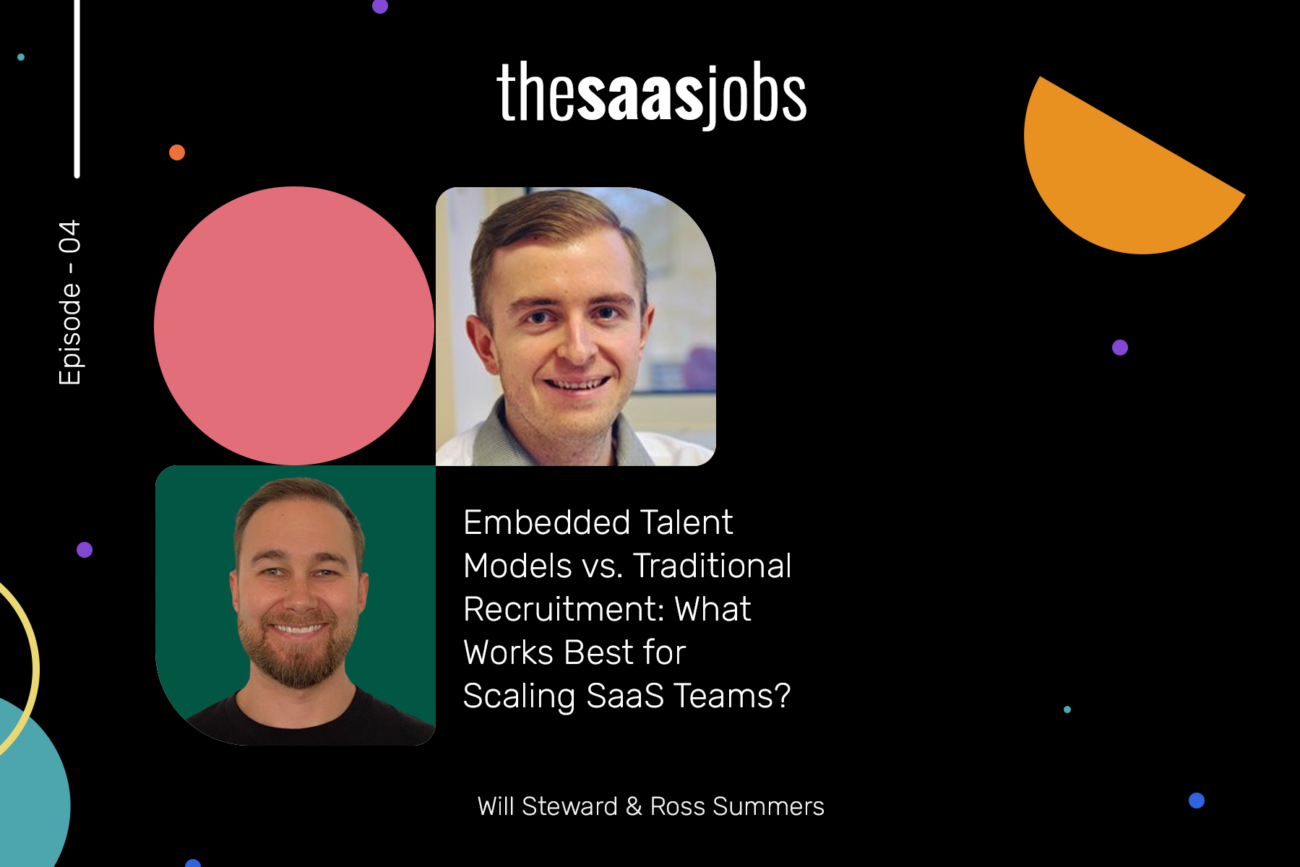
In this episode of The SaaS Jobs Podcast, our founder Will Steward sat down with Ross Summers, a founder and talent acquisition leader with over 15 years of experience helping SaaS and tech companies scale through rapid growth, IPOs and $100M+ exits, to unpack a deceptively simple question: how should SaaS companies actually hire as they scale?
Ross has built and led embedded recruitment models, partnered closely with founders, and seen first-hand where traditional agencies, in-house teams and embedded talent work best, and where they break down. This conversation is a practical guide for founders who want to stop reacting to hiring problems and start building a model that scales.
You can listen to the full episode here (or on Spotify / Apple Podcasts):
Why Hiring Model Choice Matters More Than Founders Think
Ross frames talent acquisition in a way many SaaS leaders overlook. Hiring should be treated the same way you treat customer acquisition.
Just as you define your ideal customer profile, plan your funnel and invest ahead of demand, the same thinking needs to apply to talent. The hiring model you choose should be dictated by your growth plan, not by habit or short-term pressure.
Founders typically start questioning their hiring approach when recruitment costs climb, headcount plans slip, or retention begins to fall. Sometimes this pressure comes from investors. More often, it shows up as founders spending too much of their time hiring instead of building the business.
When Early-Stage Hiring Starts to Break
In the early days, many SaaS companies hire through their own networks. Up to around 20 employees, this can work surprisingly well.
But once those networks are exhausted, hiring becomes slower and far more demanding. Founders begin juggling outreach, screening and interviews alongside running the company.
Early warning signs that the model is breaking include:
- Candidates dropping out of processes
- Offers being declined
- Headcount targets being missed
- Retention starting to dip
- Hiring managers complaining about time spent recruiting
When these signals appear, the problem is rarely effort. It is usually the hiring model itself.
Where Traditional Recruitment Agencies Work Well
Ross is clear that agencies are not inherently bad. In the right situations, they can be effective.
Traditional agencies tend to work best when:
- You are hiring one or two roles
- The role is highly niche or specialist
- Speed matters more than building long-term hiring infrastructure
A strong agency with deep SaaS expertise and an active network can move quickly in these scenarios.
Why Agencies Struggle as SaaS Companies Scale
As hiring volume increases, agency-led recruitment often becomes a risk rather than an accelerator.
Agency recruiters typically work across many clients at once, often on a contingent basis. On average, fewer than one in five roles they work on are actually filled. That means limited dedication and inconsistent delivery at scale.
Incentives also matter. Percentage-based fees reward higher salaries and faster placements, not long-term retention. Ross strongly recommends fixed fees and working with a single trusted recruiter if agencies are used at all.
When In-House Talent Teams Make Sense
Building an in-house recruitment function starts to make sense once hiring becomes consistent, often somewhere between 20 and 50 employees.
At that point, agency fees and founder time begin to outweigh the cost of an internal recruiter. Fractional or part-time recruiters can be a sensible stepping stone, especially before committing to a full team.
The Biggest Mistakes With In-House Hiring
The most common mistake Ross sees is hiring too junior.
Founders would not build sales or marketing by hiring the most junior person possible and hoping they grow into the role. Recruitment should be no different.
Other challenges include:
- Underestimating tooling and system costs
- Expecting one recruiter to cover too many roles
- Failing to invest in recruiter development
- Ignoring the pressure placed on solo recruiters
In a scaling SaaS company, even strong recruiters typically deliver two to three quality hires per month. Beyond that, capacity breaks.
What Is an Embedded Talent Model?
An embedded talent model places an experienced external recruiter directly inside your business.
They operate as an internal team member, using your email, Slack and systems, but come backed by a wider recruitment consultancy, proven processes and established tooling. Engagements are usually three, six or twelve months, with the ability to scale up or down as hiring demand changes.
Why Embedded Models Appeal to Scaling SaaS Companies
Embedded recruiters are fully dedicated to one business. They are not commission-driven and typically operate on a flat monthly fee.
Because incentives are aligned around long-term outcomes, embedded models focus on quality, speed and retention rather than quick placements. For founders, the biggest benefit is time. Recruitment comes off their plate without sacrificing confidence in the hires being made.
Retention Is the Signal Founders Should Watch
Speed to hire is often the metric founders obsess over. Ross argues that retention is the signal that really matters.
A fast hire who leaves six months later is not a success. In both in-house and embedded models, recruiters want hires to work out. Refilling roles slows the business down and creates unnecessary churn.
One Change Founders Can Make This Quarter
Ross’s advice is simple. Treat recruitment like customer acquisition.
Plan it properly. Resource it intentionally. Measure the right outcomes. Hiring becomes far more predictable when leaders stop treating it as a reactive task and start treating it as a core growth function.
Hiring or Looking for Your Next SaaS Role?
If you are hiring in SaaS, or exploring your next career move, The SaaS Jobs helps connect ambitious people with high-quality SaaS companies.
Browse open roles, explore companies, and find your next opportunity at:
👉 https://www.thesaasjobs.com
If you want to follow Ross’ work, you can connect with him on LinkedIn or learn more about Ryzon.
